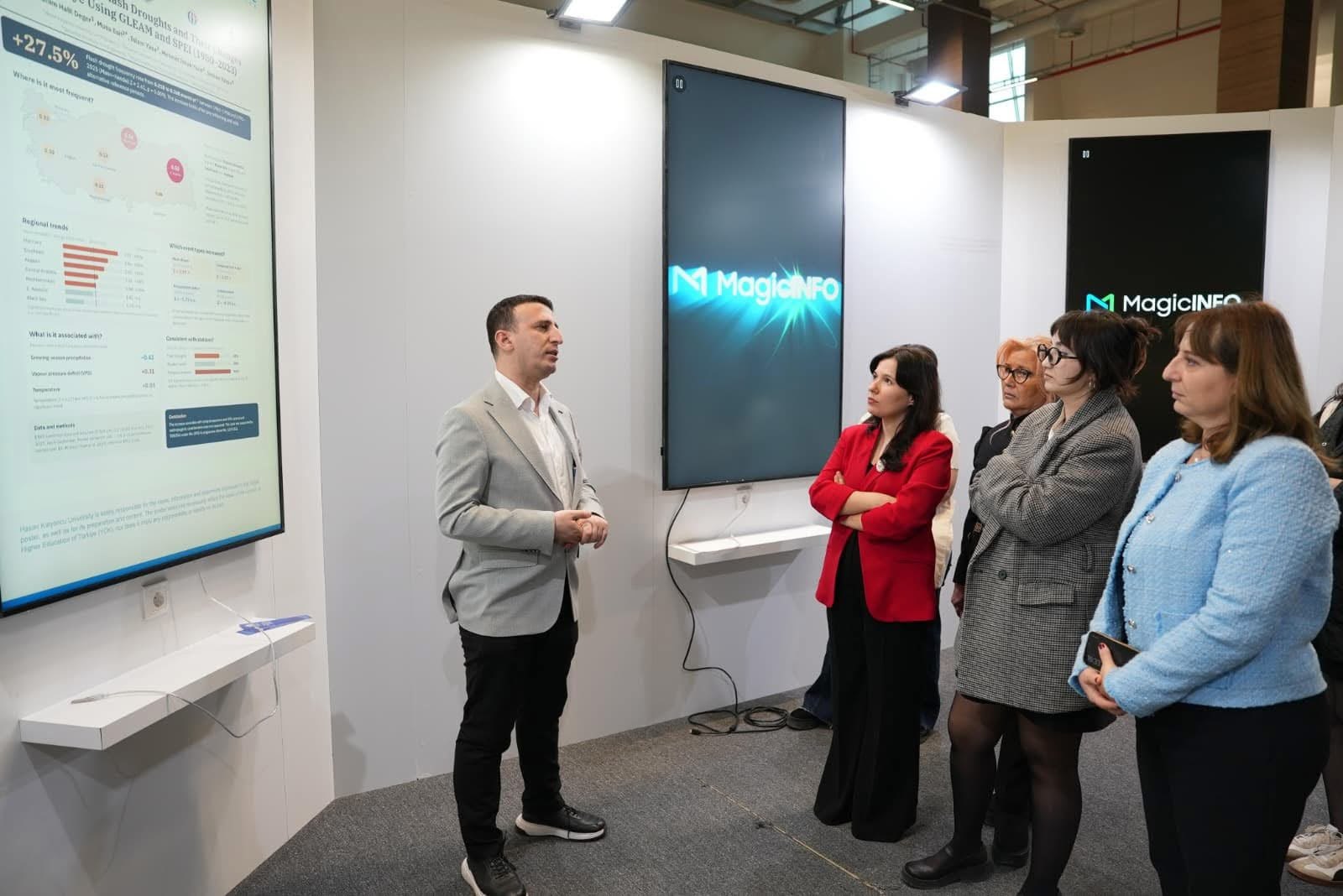
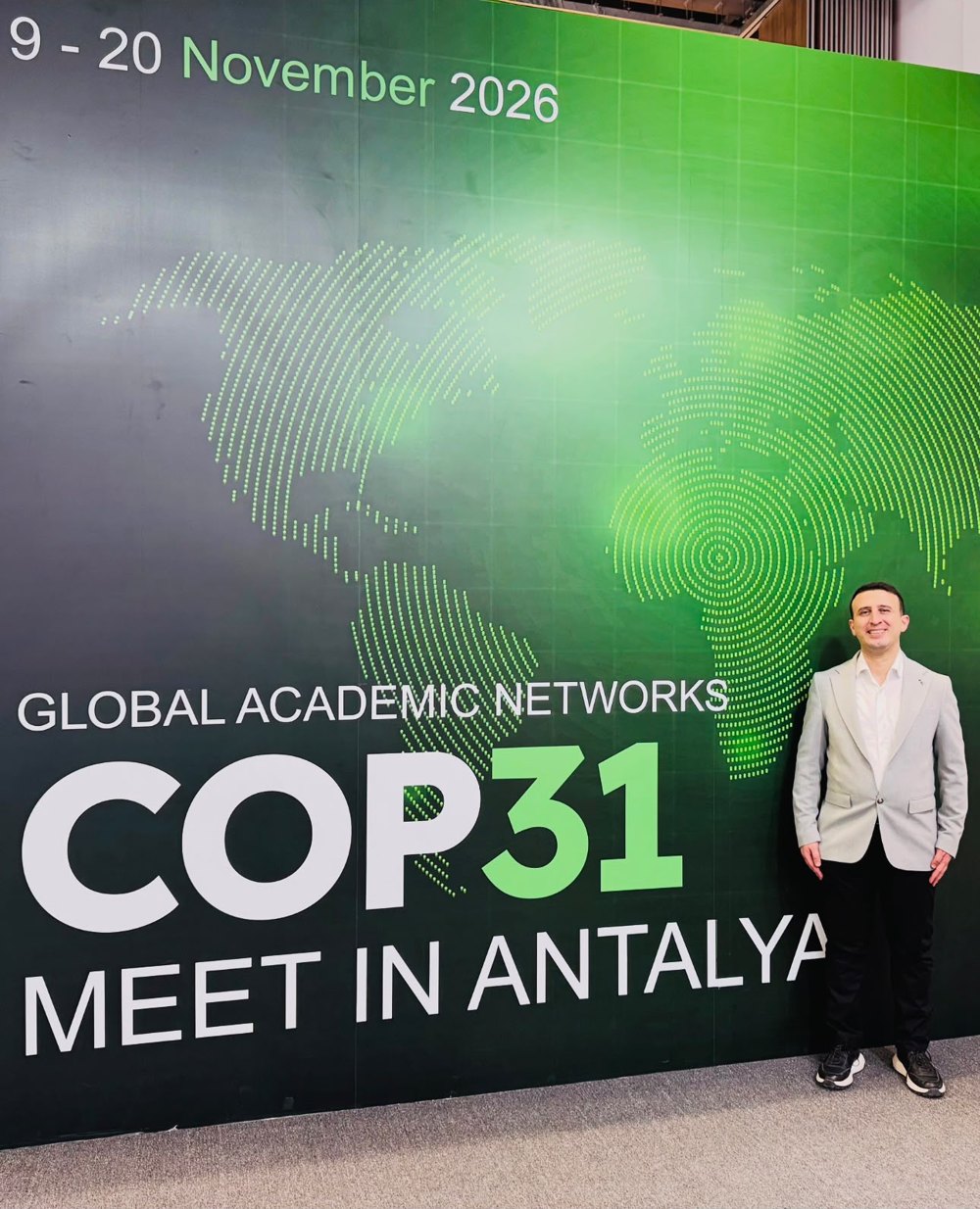
Our study presenting the first results of our flash drought project, supported by TÜBİTAK under the 1002-A programme (Grant No. 126Y252), was accepted for presentation at the YÖK pavilion at COP31.
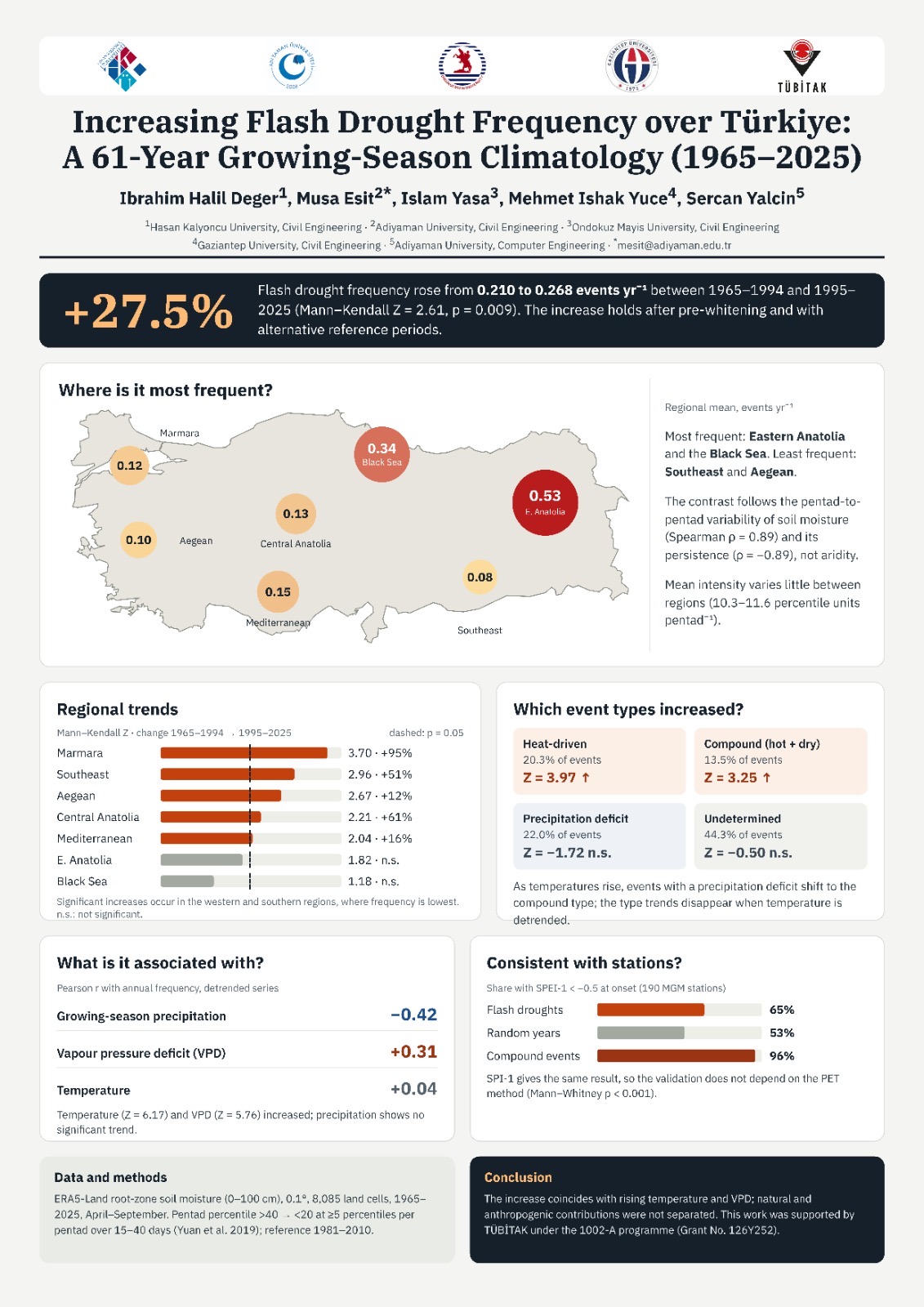
Study: Increasing Flash Drought Frequency over Türkiye: A 61-Year Growing-Season Climatology (1965–2025)
Authors: İbrahim Halil Deger, Musa Eşit, İslam Yaşa, Mehmet İshak Yüce, Sercan Yalçın
Presentation at COP31
Update, 28 November 2026: Assoc. Prof. Dr. İbrahim Halil Deger presented the study at the YÖK pavilion at COP31, held in Antalya on 9–20 November 2026.
What is a flash drought?
A conventional drought develops slowly over months. In a flash drought, soil moisture drops rapidly within a few weeks. During the growing season this is a serious threat to crops and vegetation.
What we found
We analyzed ERA5-Land root-zone soil moisture (0–100 cm) for April–September of 1965–2025 across 8,085 land cells in Türkiye.
- Flash drought frequency rose by 27.5%: from 0.210 events per year in 1965–1994 to 0.268 in 1995–2025. The increase is statistically significant (Mann-Kendall Z = 2.61, p = 0.009).
- Most frequent in Eastern Anatolia and the Black Sea: 0.53 events per year in Eastern Anatolia and 0.34 in the Black Sea region; least frequent in the Southeast (0.08) and the Aegean (0.10).
- Significant increases in the west and south: Marmara (+95%), Southeast (+51%), Central Anatolia (+61%), Aegean (+12%) and Mediterranean (+16%). Changes in Eastern Anatolia and the Black Sea are not significant.
- Heat-driven events are increasing: heat-driven flash droughts (Z = 3.97) and compound hot-and-dry events (Z = 3.25) increased significantly. Events caused only by a precipitation deficit show no significant increase.
- Consistent with station data: at 190 MGM stations, SPEI-1 indicated drought at the onset of 65% of flash droughts and 96% of compound events, compared with 53% in randomly chosen years.
Conclusion
The increase in flash droughts coincides with rising temperature and vapour pressure deficit (VPD). This study did not separate natural and human contributions.
For more on the project, see our Projects page.