In our new paper in Pure and Applied Geophysics, we examined whether the design snow loads used for roofs in northeastern Türkiye match the region’s actual snow conditions.
What we studied
We used annual maximum snow depth records from nine meteorological stations in northeastern Türkiye for 1950–2023, and asked two questions:
- How has snow depth changed over the years?
- Are the snow loads in the TS EN 1991-1-3 design standard adequate for this region?
Trends in snow depth
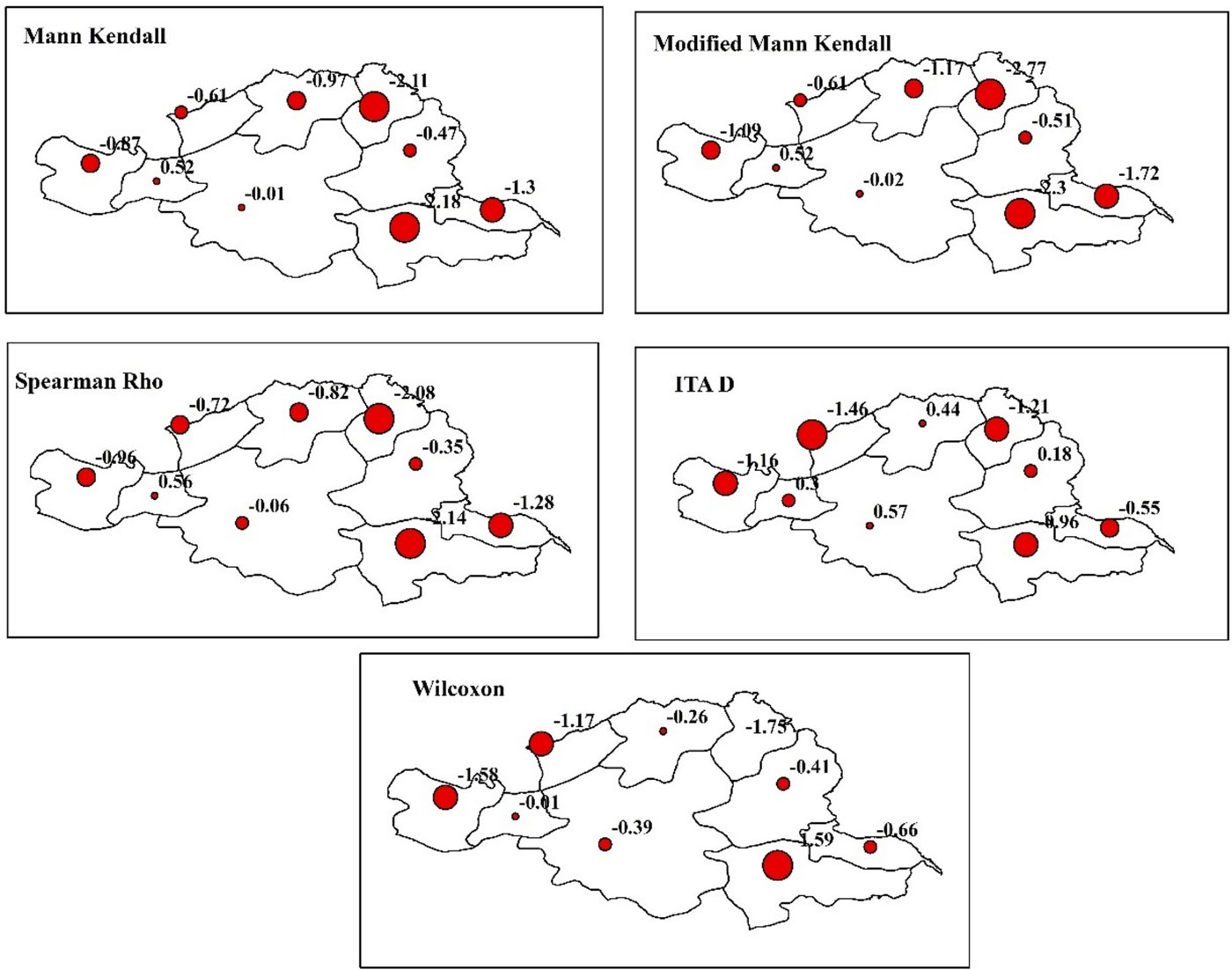
We analyzed trends with classical nonparametric tests and with Innovative Trend Analysis (ITA). A clear split emerged across the region:
- High-elevation continental stations show stable and persistent snow conditions.
- Coastal and basin stations are dominated by episodic extreme events and large year-to-year variability.
At Ardahan and Ağrı, decreasing snow depth was statistically significant in all three classical tests. When ITA split the values into severity classes, it revealed changes at other stations that occur only in certain classes and that monotonic trend tests cannot detect.
Are design snow loads adequate?
Using the best-fitting probability distribution for each station, we estimated probable maximum snow depths for return periods of up to 200 years. We then compared equivalent snow loads for the 50-year return period, which matches the standard’s exceedance probability of 0.02, with the standard’s reference values.
The result: the standard systematically underestimates snow loads across the region. Assuming a settled snow density of 3 kN/m³, the calculated load exceeded the prescribed threshold at all nine stations. Station-specific correction factors reached 4.88.
Why it matters
To the best of our knowledge, this is the first study to directly link station-level probabilistic snow load estimates with a formal adequacy assessment of TS EN 1991-1-3 for this region. The results provide a quantitative basis for a regionally calibrated revision of design snow load standards, and are directly relevant to structural engineers, municipalities and standards bodies.
The paper
Ünsal İ, Kılıç Z, Şahan MF, Eşit M, Yalçın S (2026). Spatiotemporal variability of annual maximum snow depth and reassessment of design snow loads in northeastern Türkiye (1950–2023). Pure and Applied Geophysics. doi:10.1007/s00024-026-04156-z
For snow load or extreme precipitation analyses for your region or project, see our Consulting page.